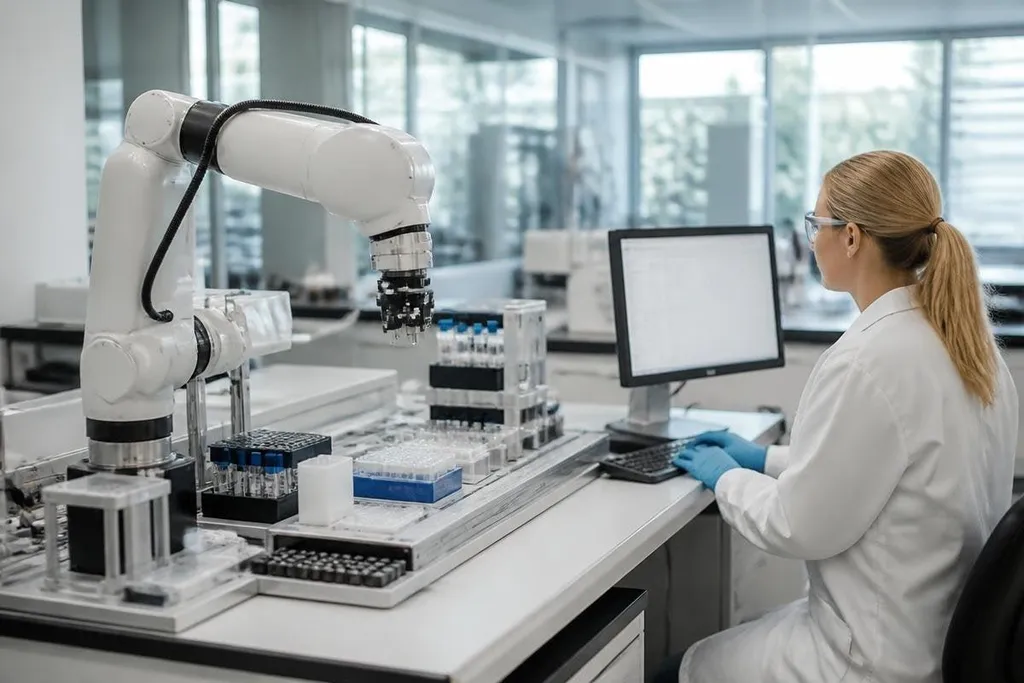
A laboratory robot can move samples, mix liquids, or run repeated tests without a person handling every step. The business opportunity sits around that work: hardware, software, services, training, and the data produced along the way.
If you’re assessing this market, the first question is practical: which part of a lab workflow costs time, creates errors, or needs more repeatable handling?
Quick read
- Robot makers can sell machines, but recurring income may come from software, support, and service contracts.
- Integration is a large part of the work because labs use different instruments, layouts, and safety rules.
- The strongest buyers will pay for a clear result, such as more tests per week or fewer manual handling steps.
Where the business starts
Laboratory automation begins with a physical task. A robot may move microplates between instruments, prepare liquid samples, load a centrifuge, or place finished samples into storage. Each task has a different gripper, sensor setup, and software connection.
That creates room for focused products. A company can build a robotic arm for one type of bench work, a mobile platform for movement between rooms, or an end effector designed for tubes and plates. An end effector is the tool attached to a robot arm; its shape and grip can decide whether the system works with real lab materials.
The buyer rarely wants a machine alone. They need the robot to fit existing instruments, benches, doors, storage units, and safety controls. That makes system integration a business in its own right, with income from design, installation, programming, and later changes.
Software can keep the system useful
Laboratories run many steps in a set order. Software can assign tasks, track samples, record instrument status, and send work to the next machine. The system also needs clear rules for faults, such as a missing plate or a failed scan.
This layer can support subscription sales, paid updates, and support agreements. The value comes from keeping the workflow running across different devices, not from adding another screen to the lab.
Open standards and application programming interfaces, or APIs, matter here. An API lets one software system exchange data with another.
A company that connects a robot to several common lab instruments may find more buyers than a company whose software works with one model only, but that claim needs customer and deployment data before it can be treated as a market result.
A pilot’s business case also depends on who pays after the hardware is installed. Laboratory robotics reports can record the robot’s task, instrument links, price, and staff time, so you can compare a sale with a service contract.
Services may be easier to sell than hardware
Many labs lack the staff to plan a full robotic cell. They may need help mapping the workflow, choosing instruments, writing safety procedures, and training operators. A service company can charge for that work without building a robot from scratch.
Maintenance creates another opening. Robots need checks on joints, cables, sensors, grippers, and software connections. A service plan can include spare parts, remote support, scheduled visits, and help after a workflow changes.
Training also has a practical role. Operators need to know how to load materials, clear faults, stop motion, and record changes. A short course tied to a specific system is easier to value than a general lesson about robotics.
Data needs a careful business model
Automated labs produce records about sample movement, instrument use, task times, and failed steps. Those records can help a lab find delays and plan staff time. They can also support process reports for quality teams.
Data handling brings limits. A supplier must define who owns the records, where they are stored, who can access them, and how long they remain available. Health, research, and commercial data may carry different rules, so a software product needs clear controls before a lab can place it in daily use.
The unproven part is often the return on investment. A robot may reduce manual work, yet the purchase can still fail financially if setup takes too long, staff cannot maintain it, or the workflow changes soon after installation.
A practical buying and building checklist
Use these questions before funding a product or service:
- Name the task: record the exact manual steps, materials, and handoffs.
- Count the work: measure samples, runs, staff hours, and repeat errors.
- Check the fit: list the instruments, software systems, room limits, and safety controls involved.
- Price the full system: include integration, training, maintenance, validation, and downtime.
- Test the exception: decide what happens when a tube breaks, a scan fails, or an instrument stops.
- Set the proof point: choose the result that must improve before wider use.
I’d start with a narrow workflow and a paid service plan, then add hardware only where repeated customer work shows a clear need.
The next business decision is specific: can the proposed system complete one lab task with fewer manual handoffs, clear fault handling, and a cost the buyer can measure?